The post Impact of Infrastructure Projects on Property Prices in Real Estate Markets appeared first on Asset Makers.
]]>What is Infrastructure Development in Real Estate Context?
Infrastructure projects refer to large-scale public or private developments that improve transportation, connectivity, utilities, and urban facilities. These include road networks, rail systems, airports, water supply systems, electricity grids, and modern urban planning initiatives.
In real estate, infrastructure acts as a backbone that supports residential, commercial, and industrial development. When infrastructure improves, accessibility increases, and this directly influences property demand and long-term property prices.
How Infrastructure Projects Increase Property Prices
1. Improved Connectivity and Accessibility
One of the most immediate effects of infrastructure projects is improved connectivity. When a new road, highway, or metro line is introduced, travel time between key locations is reduced. This makes nearby areas more attractive for living and business.
For example, properties located near major highways or metro stations often see a noticeable rise in demand. Buyers are willing to pay higher prices for convenience, which leads to overall appreciation in real estate values.
2. Rise in Residential and Commercial Demand
Infrastructure development naturally attracts population growth. As accessibility improves, more people move to previously underdeveloped areas. This increases demand for housing, shops, and commercial spaces.
With rising demand and limited supply, property prices increase. Developers also start launching new housing schemes and commercial projects, further boosting the real estate market in that region.
3. Development of Business and Economic Hubs
Large infrastructure projects often lead to the development of new business districts and commercial centers. For instance, when an industrial zone or IT park is built, surrounding areas become hotspots for investment.
Businesses prefer locations with strong infrastructure support, which increases job opportunities. As employment rises, more people move into the area, leading to higher demand for housing and increased property prices.
4. Enhanced Quality of Life
Infrastructure is not just about transportation. It also includes parks, schools, hospitals, shopping centers, and utilities. When a region has better public facilities, it becomes more livable.
Buyers are willing to pay a premium for areas that offer a better quality of life. As a result, real estate values increase steadily in well-developed neighborhoods.
5. Government Investment and Market Confidence
When governments invest heavily in infrastructure projects, it creates confidence in the real estate market. Investors see these areas as stable and promising for long-term returns. This effect is often influenced by broader planning and regulations, as explained in our guide on new government policies for housing societies in Punjab 2026.
For example, announcements of new highways or smart city projects often lead to early property buying activity. This speculation itself contributes to rising property prices even before the project is completed.
6. Urban Expansion and Land Value Growth
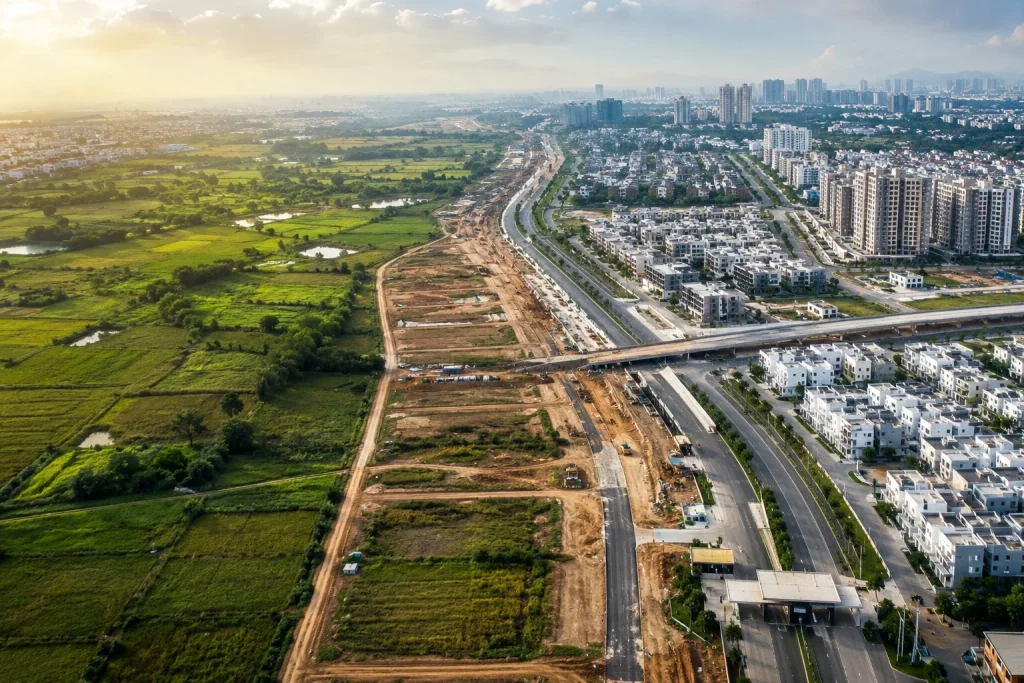
As cities expand outward, infrastructure development plays a key role in connecting suburban and rural areas to urban centers. This process transforms low-value land into high-value real estate.
Land located near upcoming infrastructure projects often experiences rapid appreciation. Investors who buy early in these areas usually gain significant returns once development is complete.
7. Impact on Commercial Real Estate
Infrastructure projects do not only affect residential property. Commercial real estate also benefits greatly. Retail outlets, office buildings, and industrial spaces all rely on accessibility and customer flow.
Areas near airports, highways, and transport hubs attract businesses, increasing demand for commercial property. This leads to higher rental income and property valuation.
8. Long-Term Real Estate Stability
One of the most important impacts of infrastructure development is long-term market stability. Areas with strong infrastructure tend to maintain consistent property demand even during market fluctuations.
Unlike speculative zones, infrastructure-supported locations offer safer investment opportunities with steady appreciation over time.
Real Estate Investment Perspective
From an investment point of view, infrastructure projects are a key indicator of future growth. Smart investors closely monitor government development plans, including road expansions, new metro lines, and housing schemes.
Early investment in such areas often leads to high capital gains. However, it is also important to consider factors like project completion timelines, legal approvals, and market demand before making investment decisions.
Challenges and Risks
While infrastructure projects generally increase property prices, there are some risks involved:
- Delayed project completion can slow down property appreciation
- Overestimation of demand may lead to speculative bubbles
- Poor urban planning can reduce long-term value
- Environmental concerns may impact certain developments
Therefore, careful research is essential before investing in infrastructure-linked real estate areas.
Conclusion
Infrastructure projects play a vital role in shaping the real estate market and directly influencing property prices. Improved connectivity, rising demand, business growth, and better living standards all contribute to real estate appreciation. As cities continue to expand and modernize, infrastructure-driven development will remain a key factor in property value growth.
For investors and buyers, understanding this relationship is essential for making informed decisions. Whether it is a new highway, metro system, or smart city project, infrastructure development continues to create long-term opportunities in the real estate market.
The post Impact of Infrastructure Projects on Property Prices in Real Estate Markets appeared first on Asset Makers.
]]>