
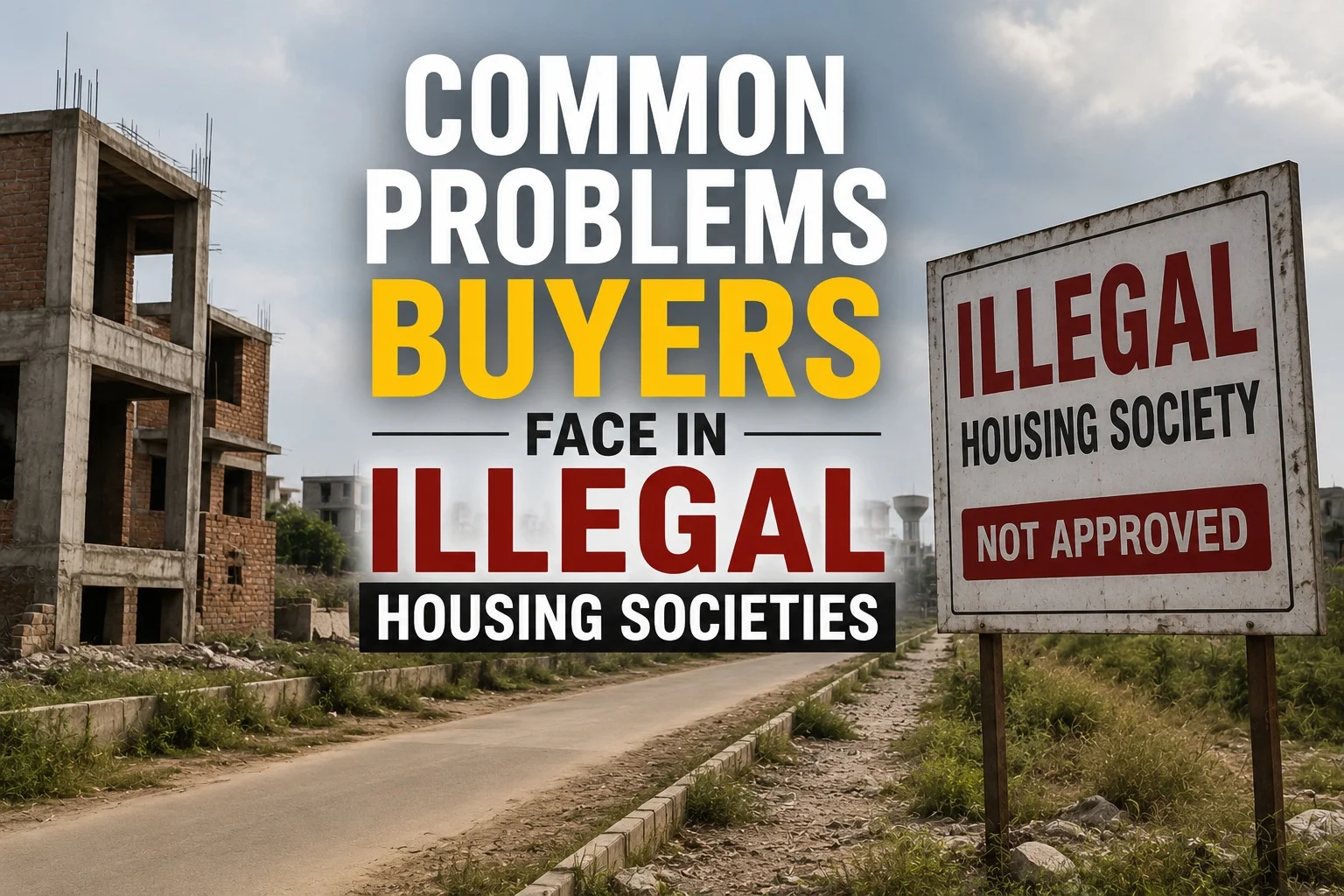
Buying property is one of the biggest financial decisions a person can make. Whether you are purchasing a residential plot or investing for future returns, choosing the right housing society is essential. Understanding the common problems buyers face in illegal housing societies can help you avoid costly mistakes and protect your investment. Unfortunately, many buyers are attracted to illegal housing societies because of their low prices, easy installment plans, and attractive marketing campaigns. While these offers may seem appealing, they often hide serious legal and financial risks.
Investing in an unapproved housing society can lead to ownership disputes, delayed development, financial losses, and even demolition of illegal structures. Understanding these risks can help you make informed decisions and protect your investment.
In this article, we’ll explore the common problems buyers face in illegal housing societies and share practical tips to help you avoid costly mistakes.
What Is an Illegal Housing Society?
An illegal housing society is a residential or commercial development that operates without the required approvals from the relevant development authority or government agency. These societies may lack essential permissions such as approved layout plans, No Objection Certificates (NOCs), or land-use approvals.
Some developers begin selling plots before completing legal formalities, while others market projects on disputed or unauthorized land. Buyers who invest without verifying the project’s legal status often face significant challenges later.
1. Uncertain Property Ownership
One of the biggest risks of buying property in an illegal housing society is uncertainty over ownership.
If the developer does not legally own the land or has failed to complete proper documentation, buyers may struggle to prove ownership. In some cases, multiple people may be sold the same plot, leading to lengthy legal disputes.
Before making any payment, always verify land ownership records and request copies of relevant legal documents.
2. Lack of Development Authority Approval
Approved housing societies must meet planning and legal requirements established by the relevant authorities. Illegal housing societies often bypass these requirements.
Without official approval, there is no guarantee that the project complies with zoning regulations, infrastructure standards, or environmental guidelines. Authorities may stop development, issue legal notices, or prohibit further construction.
Checking the society’s approval status should always be part of your property verification process.
3. Delayed or Incomplete Development
Many buyers invest based on promises of modern infrastructure, parks, schools, and commercial areas. However, illegal housing societies frequently fail to deliver these facilities.
Common development issues include:
- Unpaved roads
- Poor drainage systems
- Incomplete sewerage networks
- Delayed possession of plots
- Lack of public facilities
These delays reduce both the usability and future value of the property.
4. Difficulty Getting Utility Connections
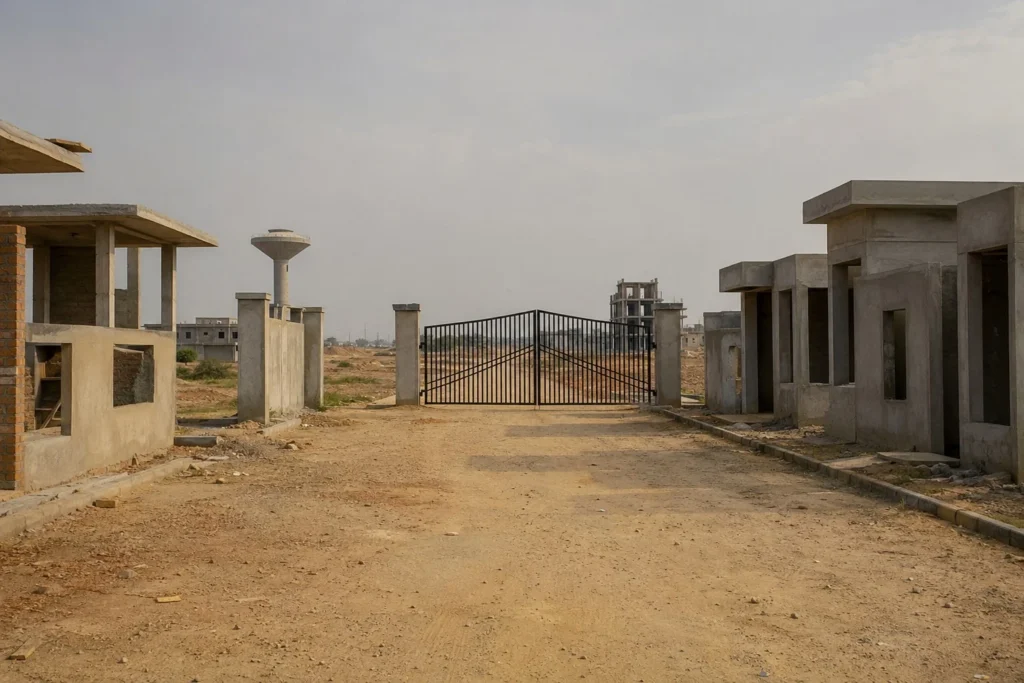
Access to basic utilities is essential for any residential community. Buyers in illegal housing societies often experience problems obtaining:
- Electricity
- Gas connections
- Water supply
- Sewerage services
- Internet infrastructure
Utility providers may refuse permanent connections if the housing society has not received legal approval. Residents may have to rely on temporary arrangements that increase costs and reduce convenience.
5. Financial Losses
Low prices often attract first-time investors, but they can also lead to significant financial losses.
If authorities declare a housing society illegal or suspend its development, property values may decline sharply. Buyers may find it difficult to recover their investment or sell their plots, making it even more important to identify a good real estate investment opportunity before purchasing property.
Additionally, developers facing legal challenges may stop construction altogether, leaving investors with incomplete projects and uncertain returns.
6. Legal Disputes and Court Cases
Illegal housing societies are more likely to become involved in legal disputes.
These disputes may involve:
- Land ownership conflicts
- Boundary disagreements
- Fraud allegations
- Approval-related litigation
- Consumer complaints against developers
Legal proceedings can continue for years, delaying development and preventing buyers from taking possession of their property.
7. Problems Selling the Property
Selling property in an illegal housing society can be extremely challenging.
Most buyers prefer projects with verified legal status and proper documentation. Banks and financial institutions may also hesitate to finance purchases in unapproved societies, reducing the number of potential buyers.
As a result, investors often struggle to sell their property at a fair market price.
8. Risk of Demolition or Government Action
Government authorities have the power to take action against unauthorized developments.
Depending on the circumstances, authorities may:
- Stop construction activities
- Cancel project approvals
- Seal illegal structures
- Order demolition of unauthorized buildings
- Restrict future development
Although every case is different, buyers in illegal housing societies face greater uncertainty compared to those investing in approved projects.
9. Increased Risk of Property Fraud
Fraud is another major concern in illegal housing societies.
Some developers use misleading advertisements, fake approvals, or unrealistic promises to attract investors. Others may disappear after collecting payments, leaving buyers with little legal protection.
Common warning signs include:
- Extremely low prices compared to nearby projects
- Pressure to make quick payments
- Refusal to provide legal documents
- Unclear ownership records
- Unrealistic development timelines
Conducting proper due diligence can help reduce the risk of property fraud.
10. Limited Investment Growth
Property investors typically expect long-term appreciation. However, illegal housing societies often experience slower price growth because buyers lack confidence in their legal status.
Properties in approved developments generally attract greater demand due to better infrastructure, legal protection, and improved access to financing. Investing in a legally approved project can provide greater stability over time.
How to Avoid Illegal Housing Societies
Taking a few precautionary steps before investing can help protect your money.
Verify Legal Approval
Confirm that the housing society has received approval from the relevant development authority and possesses all required legal permissions.
Review Property Documents
Carefully examine ownership records, layout plans, allotment letters, and other important documents before signing any agreement.
Research the Developer
Choose developers with a strong reputation and a history of successfully completing previous projects.
Visit the Site
A physical visit allows you to assess development progress, available infrastructure, and the overall condition of the project.
Seek Professional Advice
If you have any doubts, consult a qualified real estate professional or legal expert before making your investment decision.
Conclusion
Buying property should be a secure investment, not a source of ongoing legal and financial stress. While illegal housing societies may appear attractive because of their lower prices, they often expose buyers to ownership disputes, delayed development, limited utility services, and significant financial risks.
Taking the time to verify approvals, review property documents, and research the developer can help you avoid costly mistakes. Careful due diligence not only protects your investment but also gives you greater confidence throughout the buying process.
A well-informed buyer is far more likely to invest in a project that offers legal security, long-term value, and peace of mind.


