

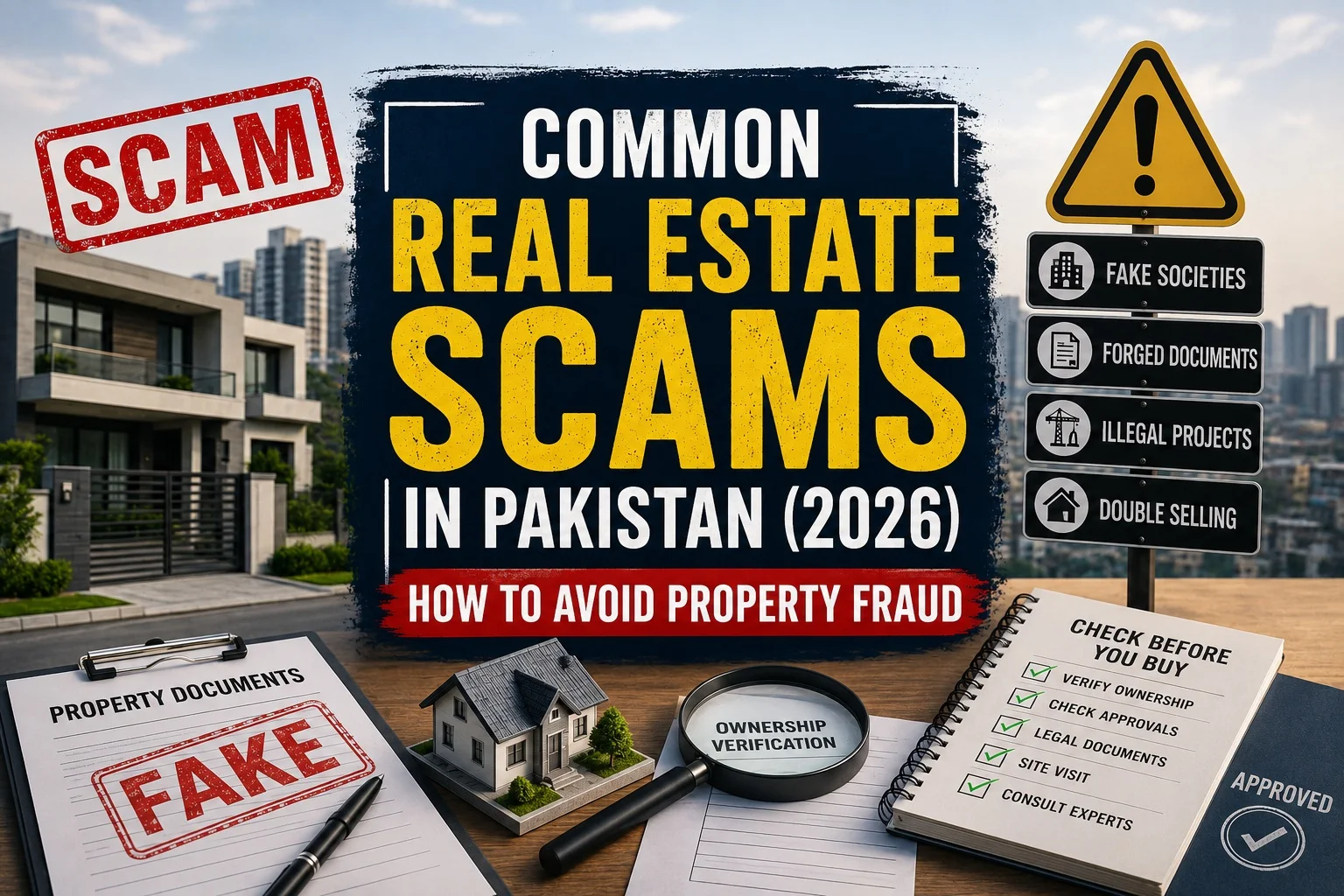
Buying property is one of the biggest financial decisions most people make. Whether you’re purchasing your first home, investing in a residential plot, or expanding your real estate portfolio, protecting your investment should be your top priority. Unfortunately, real estate scams in Pakistan continue to affect thousands of buyers every year, resulting in financial losses, lengthy legal disputes, and emotional stress.
As Pakistan’s property market continues to grow in 2026, scammers are also using more sophisticated methods to deceive buyers. From fake housing societies and forged property documents to online listing fraud, understanding these risks can help you make informed decisions.
This guide explains the most common real estate scams in Pakistan, highlights warning signs, and provides practical tips to help you avoid property fraud in Pakistan.
Why Property Fraud Is Increasing in Pakistan
Pakistan’s real estate sector remains one of the country’s most attractive investment markets. Rapid urban development, increasing housing demand, and digital property listings have created more opportunities for buyers. However, these developments have also made it easier for fraudsters to target inexperienced investors.
Many property buyers fail to perform proper due diligence before making payments. Others rely solely on verbal assurances from agents or sellers without verifying ownership records or legal approvals. Limited awareness about the property verification process in Pakistan further increases the risk of fraud.
Understanding common scams is the first step toward protecting your investment.
1. Fake Housing Society Scams
One of the most common forms of property fraud in Pakistan involves fake or unapproved housing societies. Fraudsters advertise attractive investment opportunities with low prices, flexible installment plans, and promises of high future returns.
In many cases, these societies either lack approval from the relevant development authority or exist only on paper. Buyers often discover the fraud after construction never begins or authorities declare the project illegal.
How to Avoid It
- Verify approval from the relevant development authority before investing.
- Review the developer’s history and completed projects.
- Visit the project site instead of relying only on advertisements.
- Avoid making advance payments without legal verification.
2. Forged Property Documents
Fake ownership documents remain a major concern across Pakistan’s property market. Scammers may produce forged title deeds, fake sale agreements, or manipulated ownership records to convince buyers that they legally own the property.
Without proper verification, buyers may unknowingly purchase disputed or illegally owned land.
How to Avoid It
- Verify ownership through official land record systems.
- Compare original documents with government records.
- Consult a qualified property lawyer before signing agreements.
- Never rely solely on photocopies of legal documents.
3. Double Selling of Property
In this scam, a dishonest seller sells the same property to multiple buyers by accepting advance payments from each party.
Victims usually discover the fraud when attempting to transfer ownership or take possession of the property.
How to Avoid It
- Complete ownership verification before making any payment.
- Register the sale agreement immediately after purchase.
- Avoid unnecessary delays between payment and property transfer.
- Work with reputable legal professionals during the transaction.
4. Plot File Scams

Many investors purchase plot files before physical possession is available. While this investment model can be legitimate, scammers often exploit it by selling fake files or files for plots that do not exist.
Some fraudsters even sell duplicate files to multiple buyers.
How to Avoid It
- Verify the file directly with the housing society.
- Confirm plot allocation records.
- Request official receipts and documentation.
- Avoid purchasing files through unverified middlemen.
5. Online Property Listing Fraud
The popularity of digital property marketplaces has created new opportunities for scammers. Fake listings often feature attractive prices, stolen photographs, and false property details to lure buyers.
Victims may be asked to pay booking fees or advance deposits before viewing the property.
How to Avoid It
- Visit the property in person before making any payment.
- Verify the seller’s identity.
- Be cautious of prices significantly below market value.
- Never transfer money without confirming ownership.
6. Fake Real Estate Agents
Not every person claiming to be a property consultant is licensed or trustworthy. Some fake agents collect commissions, booking amounts, or reservation fees before disappearing.
Others intentionally misrepresent property details to secure higher commissions.
How to Avoid It
- Work with established real estate agencies.
- Request identification and business credentials.
- Ask for references from previous clients.
- Avoid cash payments without proper receipts.
7. Illegal Land Occupation
Illegal occupation of vacant land remains a serious issue in some areas. Unsuspecting buyers may purchase land already occupied by unauthorized individuals or involved in legal disputes.
Resolving these cases can take years through the courts.
How to Avoid It
- Physically inspect the property before purchase.
- Confirm possession status with local authorities.
- Review the property’s legal history.
- Hire a lawyer for proper due diligence.
Warning Signs of Property Fraud
Recognizing suspicious behavior early can prevent costly mistakes. Watch for these common warning signs:
- Property prices that seem too good to be true.
- Pressure to make immediate payments.
- Sellers refusing document verification.
- Missing ownership records.
- Unapproved housing projects.
- Cash-only transactions.
- Inconsistent property information.
- Lack of written agreements.
If you notice any of these red flags, pause the transaction until everything has been independently verified.
How to Verify Property Before Buying
Proper property verification in Pakistan is essential before purchasing any real estate.
Follow these important steps:
Verify Ownership Records
Check official land records to confirm the seller is the legal owner.
Confirm Housing Society Approval
Ensure the project has approval from the relevant development authority.
Review Legal Documents
Carefully examine title deeds, transfer documents, tax records, and previous ownership history.
Inspect the Property
Visit the property personally to verify its location, boundaries, and physical condition.
Consult a Property Lawyer
A legal expert can identify documentation issues and protect your interests throughout the transaction.
Tips to Avoid Real Estate Scams in Pakistan
Protecting yourself from real estate fraud in Pakistan requires careful planning and patience.
- Never rush into a property purchase.
- Verify every legal document independently.
- Conduct proper property due diligence.
- Avoid paying large cash advances.
- Use secure banking channels for payments.
- Keep copies of all agreements and receipts.
- Research the developer’s reputation.
- Confirm the property’s legal status before signing contracts.
- Seek professional legal advice whenever necessary.
These simple precautions can significantly reduce your risk of becoming a fraud victim.
What Should You Do If You Become a Victim?
If you suspect property fraud, act immediately.
- Gather all contracts, receipts, payment records, and communications.
- Contact a qualified lawyer for legal guidance.
- Report the incident to the relevant law enforcement authorities.
- Notify the housing society or development authority if applicable.
- Preserve all evidence for future legal proceedings.
Prompt action improves the chances of protecting your legal rights and recovering financial losses.
Conclusion
Pakistan’s real estate market offers excellent investment opportunities, but it also requires careful decision-making. By understanding the common real estate scams in Pakistan, verifying ownership records, checking housing society approvals, and consulting qualified professionals, buyers can greatly reduce the risk of property fraud in Pakistan.
The safest investment is an informed one. Taking the time to conduct proper research, verify legal documents, and avoid rushed decisions can protect both your finances and your future. Whether you’re buying your first home or investing in commercial property in 2026, careful due diligence remains the most effective defense against real estate scams.


