

Property transactions in Punjab are becoming increasingly digital as land records, property transfers, e-stamping and registration services move toward computerized systems. For buyers, this shift can make property transactions more transparent, easier to verify and less dependent on paper-based processes.
However, digital property transactions in Punjab do not eliminate every risk. Buyers still need to verify ownership, documents, taxes, property status and other legal details before completing a purchase.
Understanding both the benefits and risks can help buyers make safer property decisions.
What Are Digital Property Transactions in Punjab?
Digital property transactions involve using computerized land records and electronic systems for services such as property transfer, land record verification, e-stamping and deed registration.
The Punjab Land Records Authority (PLRA) provides services including property transfers, Fard issuance, ownership verification, e-stamping and e-registration. Punjab has also taken steps to digitise property transactions to reduce property fraud, making digital systems increasingly important for property buyers.
The digital system does not necessarily mean that every part of a property transaction can be completed entirely online. Depending on the service, buyers and sellers may still need to provide documents, complete identity or biometric verification, or visit an authorized service centre.
For example, the PLRA property transfer process includes submitting an application, providing buyer and seller information, paying applicable fees and completing biometric verification at an Arazi Record Centre.
How Digital Property Registration Works
The process can vary depending on the type of transaction, but digital property services generally involve several stages.
First, the buyer and seller provide the required property and identity information. The relevant land record is then checked against the available computerized records.
For registered deeds, Punjab’s e-Registration system provides a process for creating a user account, initiating a deed registration request, entering transaction information and completing the required verification.
E-stamping is another important part of the process. The system can calculate applicable stamp duty, Capital Value Tax and other charges based on property details, while generating a digital challan for payment.
After the relevant requirements are completed, the transaction can proceed through the applicable registration, transfer or mutation process.
Benefits of Digital Property Transactions for Buyers
1. Easier Property Record Verification
One of the biggest advantages of digital land records is easier access to ownership information.
Buyers can use official land record services to check relevant property information rather than relying entirely on documents provided by a seller or property dealer.
This can help buyers identify inconsistencies before committing a large amount of money.
2. Greater Transparency
Computerized systems can create a clearer record of property transactions and reduce dependence on informal paperwork.
PLRA describes its digital land record system as a way to provide transparent and accessible land services. Its network of Arazi Record Centres allows citizens to obtain Fard, transfer land, verify ownership and access other services through a computerized environment.
Greater transparency can make it more difficult for inaccurate or incomplete information to remain unnoticed.
3. Reduced Paperwork
Traditional property transactions can involve multiple documents, challans and physical records. Digital systems can reduce some of this paperwork by storing and processing information electronically.
This can make it easier for buyers to track important transaction information and maintain records for future reference.
4. More Accurate Fee Assessment
E-stamping can help reduce mistakes in calculating applicable charges. According to PLRA, the e-Stamp system automatically calculates stamp duty, CVT and other charges based on property type and location.
For buyers, this can provide greater clarity about the financial requirements associated with a transaction.
5. Better Protection Against Certain Types of Fraud
Digital verification can make some forms of property fraud more difficult by connecting transactions with computerized ownership information and identity verification.
For example, PLRA’s property transfer process includes biometric verification, while its Green Property Certificate process involves identity verification and review of ownership and transaction history.
However, digital systems should be viewed as an additional layer of protection rather than a complete guarantee against fraud.
Risks of Digital Property Transactions
1. Digital Records May Not Answer Every Legal Question
A computerized land record is important, but it does not mean a buyer can skip legal due diligence.
Buyers should still check whether the property is subject to a mortgage, court dispute, inheritance issue, stay order, unpaid dues or another legal restriction.
PLRA’s Green Property Certificate process, for example, includes checks for ownership history, unpaid taxes or dues, bank mortgages, encumbrances and court orders.
2. Errors in Existing Records Can Still Create Problems
Digitizing information does not automatically guarantee that every historical record is accurate.
If an ownership record contains an error, missing information or an unresolved mutation, the issue may still need to be corrected through the appropriate authority.
Buyers should therefore compare official records with the seller’s documents and the actual property situation.
3. Cybersecurity and Account Risks
As more property services become digital, protecting account credentials and personal information becomes increasingly important.
Buyers should use official government portals, avoid sharing passwords or verification codes and be cautious about links sent through unofficial sources.
They should also avoid giving sensitive information to unverified agents or intermediaries.
4. Fake Websites and Fraudulent Agents
The growth of digital property services can also create opportunities for scammers to imitate government portals or offer unauthorized services.
Buyers should verify that they are using official PLRA or government channels. PLRA also provides information for locating and verifying authorized Arazi Moawin service centres.
5. Digital Systems Do Not Replace Physical Property Verification
A digital record can confirm important ownership information, but it does not necessarily confirm what exists physically on the land.
Before purchasing property, buyers should inspect the site, verify boundaries and compare the property’s location and measurements with the official record.
Where necessary, professional legal or surveying advice can provide an additional layer of protection.
What Should Buyers Check Before a Digital Property Transaction?
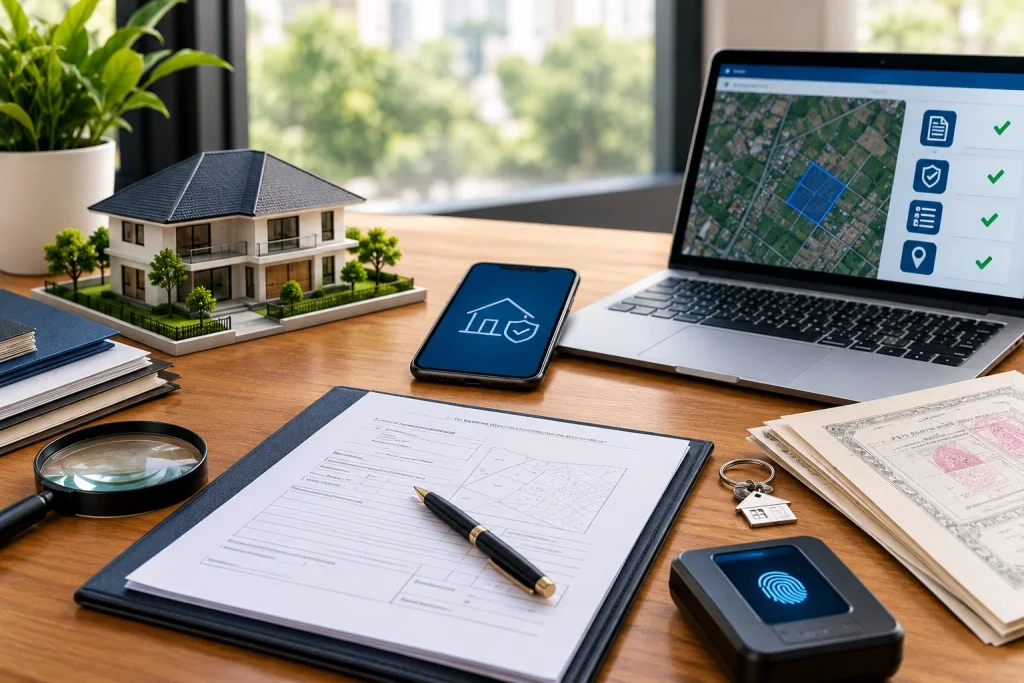
Buyers should complete their due diligence before making a major payment. A practical checklist includes:
- Verify the seller’s identity and ownership.
- Obtain and verify the relevant Fard or land record.
- Check the property’s transaction and mutation history.
- Confirm that the property details match the official record.
- Check for mortgages, court cases, disputes or other encumbrances.
- Confirm applicable taxes, stamp duty and registration charges.
- Use official PLRA services and authorized centres.
- Complete required biometric verification.
- Inspect the physical property and its boundaries.
- Keep copies of the sale deed, challans, receipts and other transaction documents.
- Consult a qualified property lawyer when ownership or legal issues are unclear.
PLRA’s mutation guidance also indicates that ownership details such as Khewat and Khatooni are reviewed during the record verification process.
Are Digital Property Transactions Safer for Buyers?
Yes, digital property transactions can make buying property safer by improving record access, verification and transparency, but they do not remove the need for due diligence.
The biggest advantage is that buyers can rely more heavily on computerized government records instead of depending solely on seller-provided documents or informal information.
At the same time, buyers should remember that a digital system is only one part of the property verification process. Ownership history, legal status, physical possession, taxes, mortgages and disputes should also be considered before completing a transaction.
Frequently Asked Questions (FAQs)
1. What are digital property transactions in Punjab?
Digital property transactions in Punjab use computerized systems for services such as property transfer, land record verification, e-registration and e-stamping, making property dealings more transparent and easier to track.
2. What are the benefits of digital property transactions for buyers?
Digital property transactions can help buyers verify ownership records, reduce paperwork, improve transparency, simplify fee payments and reduce the risk of certain types of property fraud.
3. Are digital property transactions in Punjab safe for buyers?
Digital property transactions can be safer because they provide access to computerized records and identity verification. However, buyers should still check ownership, legal disputes, mortgages, taxes and physical property details.
4. How can buyers verify property ownership in Punjab?
Buyers can verify property ownership through official Punjab land record services and obtain relevant records such as Fard. They should also compare the official information with the seller’s documents before making a payment.
5. What risks should buyers consider when transferring property digitally in Punjab?
Buyers should consider inaccurate records, unresolved ownership disputes, mortgages, cybersecurity risks, fake websites and fraudulent agents. Using official channels and completing proper legal due diligence can reduce these risks.
Conclusion
Digital property transactions in Punjab represent an important shift toward more transparent and technology-based property services. E-registration, e-stamping, computerized land records and digital verification can save time, reduce paperwork and improve access to official property information.
For buyers, these changes can make property transactions more convenient and provide stronger tools for checking ownership and transaction records.
However, technology cannot replace careful verification. Buyers should use official PLRA services, verify property documents, inspect the property and seek professional legal advice where necessary.
The safest approach is to treat digital property services as a verification and transparency tool not as a substitute for complete property due diligence.

