


Owning property in Pakistan is a dream for many overseas Pakistanis. Overseas Pakistanis buying property in Pakistan can benefit from strong investment opportunities, whether they want to build a family home, invest in the growing real estate market, or secure their financial future. However, purchasing property from abroad requires careful planning, thorough research, and proper legal verification to avoid financial losses and legal complications.
Before making an investment, overseas Pakistanis should understand the legal process, verify property documents, calculate taxes, and choose reliable housing societies. This guide explains everything you need to know before buying property in Pakistan and helps you make informed investment decisions.
Why Overseas Pakistanis Are Investing in Pakistan’s Real Estate
Pakistan’s real estate sector continues to attract overseas investors because of its long-term growth potential and relatively affordable property prices compared to many other countries. Residential plots, commercial properties, and apartments in well-developed areas often appreciate in value over time. For example, overseas Pakistanis interested in regional investment opportunities can explore our guide on how to safely invest in Faisalabad property to better understand the buying process and important legal considerations.
Many overseas Pakistanis also purchase property to:
- Build a retirement home.
- Generate rental income.
- Secure family assets.
- Diversify their investment portfolio.
- Benefit from long-term capital appreciation.
While these opportunities are attractive, every investment should begin with proper due diligence.
Understand the Legal Requirements Before Buying Property
One of the first things overseas Pakistanis should know before buying property in Pakistan is the legal process. Purchasing property without verifying ownership or legal status can result in costly disputes.
Before finalizing a deal, ensure that:
- The seller is the legal owner.
- The property has clear ownership records.
- There are no legal disputes or outstanding liabilities.
- The housing society has the necessary approvals from relevant authorities.
- The property transfer process follows all applicable laws.
Hiring an experienced property lawyer or legal advisor can help protect your investment throughout the transaction.
Verify the Property Documents Carefully
Property verification is one of the most important steps in buying real estate in Pakistan. Never rely solely on verbal promises or unofficial documents.
Check documents such as:
- Original title documents
- Sale deed
- Allotment letter (if applicable)
- Transfer letter
- Mutation records
- Approved site plan
- Tax payment records
If you are buying property in a housing society, confirm that the society has valid approvals and that the plot or property is officially registered.
Proper document verification significantly reduces the risk of property fraud.
Choose a Reliable Housing Society
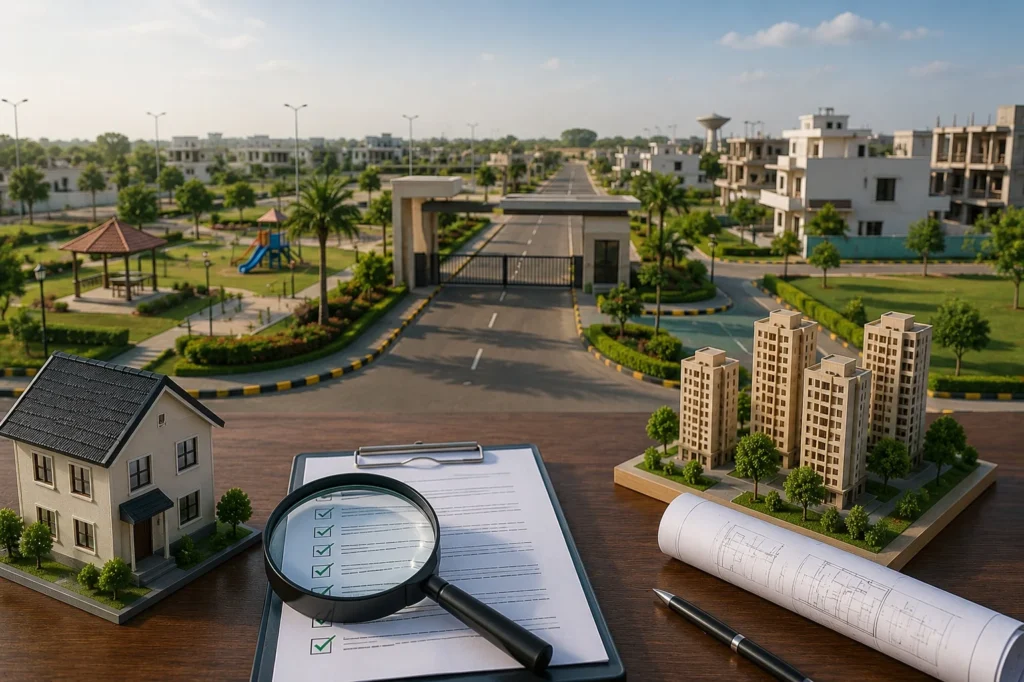
Not every housing project offers the same level of security or investment potential. Overseas Pakistanis should only invest in reputable housing societies with a proven development record.
When comparing different projects, consider:
- Legal approval status
- Infrastructure development
- Road accessibility
- Utilities and community facilities
- Developer reputation
- Market demand
- Future development plans
Choosing an established housing society may cost slightly more, but it often provides greater security and better long-term returns.
Understand Taxes and Additional Costs
Many buyers focus only on the property’s purchase price and overlook additional expenses.
Depending on the transaction, you may need to pay:
- Advance tax
- Stamp duty
- Registration fee
- Transfer fee
- Capital Gains Tax (where applicable)
- Other government charges
Tax regulations can change over time, so overseas Pakistanis should confirm the latest requirements before completing a purchase.
Proper financial planning helps avoid unexpected expenses during the buying process.
Be Aware of Property Scams
Real estate fraud remains a concern in many markets, including Pakistan. Overseas buyers are often targeted because they cannot inspect properties in person.
Common scams include:
- Verify every document independently.
- Visit the property whenever possible.
- Work with reputable real estate professionals.
- Avoid making payments without written agreements.
- Never rush into an investment because of limited-time offers.
Careful verification is the best defense against fraud.
Consider Using a Power of Attorney
If you cannot travel to Pakistan, you may authorize a trusted family member or legal representative through a Power of Attorney (PoA).
A properly executed Power of Attorney allows your representative to:
- Sign documents
- Complete property registration
- Attend government offices
- Transfer ownership
- Manage legal formalities
The document should be prepared according to Pakistani legal requirements and authenticated where necessary to ensure its validity.
Evaluate the Investment Potential
Buying property should not be based only on emotions. Overseas Pakistanis should evaluate the property’s future growth potential.
Ask yourself:
- Is the location developing rapidly?
- Are major infrastructure projects planned nearby?
- Is rental demand increasing?
- Does the area have commercial growth?
- Are property values appreciating consistently?
Properties in well-connected locations with schools, hospitals, shopping centers, and transportation links often perform better over time.
A thorough market analysis can help maximize your return on investment.
Work with Trusted Real Estate Professionals
Choosing the right real estate consultant is just as important as choosing the right property.
A professional agent can help you:
- Find verified properties.
- Negotiate fair prices.
- Verify legal documents.
- Complete property registration.
- Understand current market trends.
- Avoid fraudulent transactions.
Always research the agency’s reputation, experience, and client reviews before making a decision.
Keep Digital Records of Every Transaction
Maintain organized records of all documents related to your property purchase.
These include:
- Purchase agreement
- Payment receipts
- Bank transfer records
- Property documents
- Tax receipts
- Registration certificates
- Communication with the seller
Digital copies provide additional security and make future property management much easier.
Think About Long-Term Property Management
If you plan to remain abroad after purchasing property, consider how the property will be managed.
Questions to consider include:
- Who will maintain the property?
- Who will collect rental income?
- Who will pay utility bills and taxes?
- Who will inspect the property periodically?
Having a reliable management plan protects your investment and reduces future complications.
Conclusion
Buying property in Pakistan can be an excellent investment opportunity for overseas Pakistanis, but success depends on careful planning and informed decision-making. Before investing, verify property documents, understand the legal process, calculate all taxes and fees, and choose reputable housing societies with strong development potential.
Avoid making decisions based solely on attractive prices or marketing promises. Instead, focus on legal verification, due diligence, and long-term value. Working with experienced real estate professionals and keeping complete records of every transaction can provide additional peace of mind.
With proper research and a cautious approach, overseas Pakistanis can confidently invest in Pakistan’s real estate market while protecting their hard-earned savings and building valuable assets for the future.


