
Real estate investment has always been considered one of the most stable and profitable ways to build long-term wealth. Among the many options available, investors often face a common dilemma: Ready-to-Build land vs Raw land. Both options offer unique advantages, risks, and profit potential, but choosing the right one depends on your budget, investment goals, and market understanding.
In this article, we will break down both investment types in detail to help you understand which real estate investment is better for you in 2026 and beyond.
What Is Ready-to-Build Land?
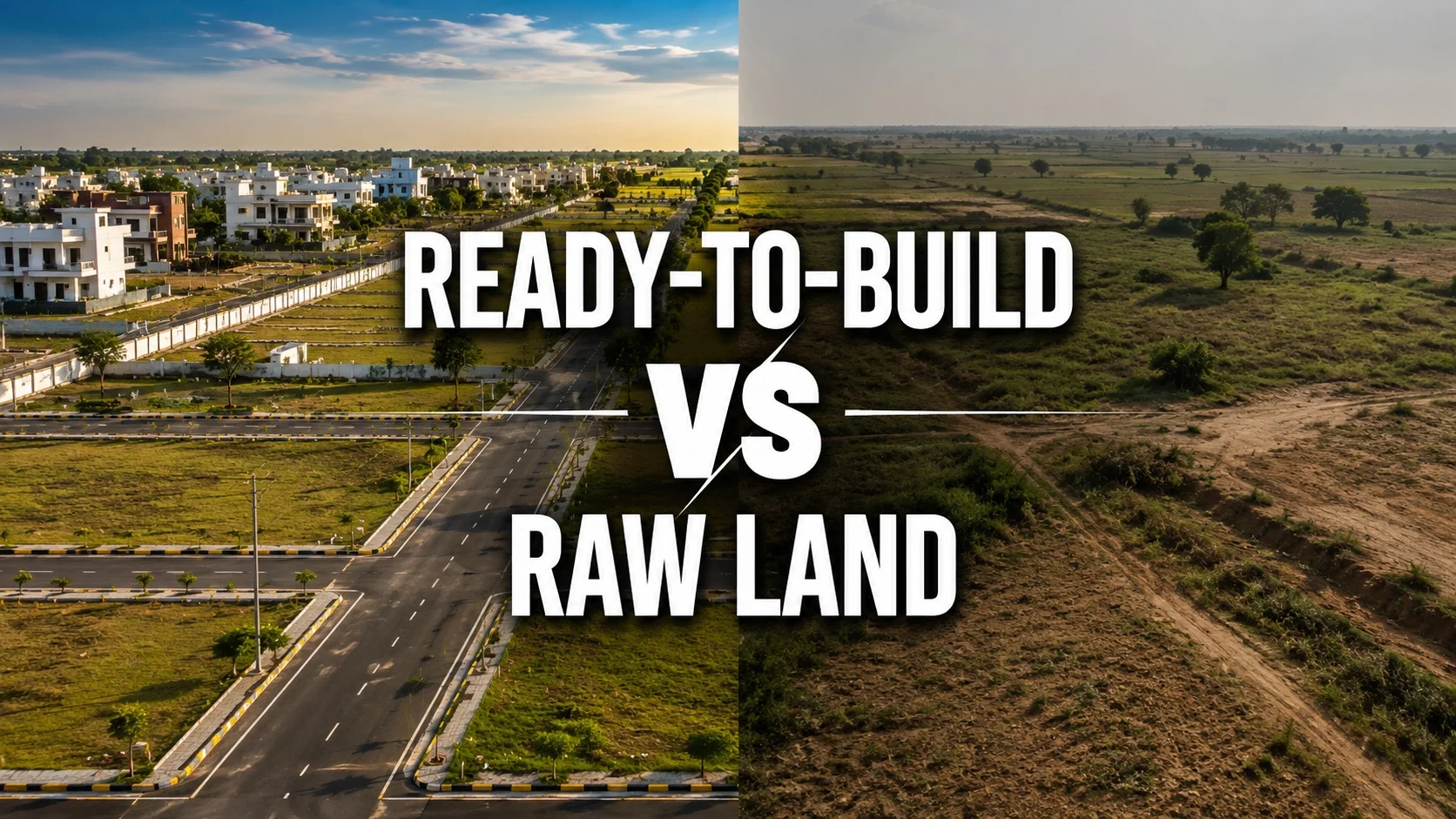
Ready-to-build land refers to plots that are fully developed and approved for construction. These plots are usually located in legal housing societies or developed residential schemes where essential infrastructure is already available.
Key features of ready-to-build land:
- Approved by development authorities
- Access to electricity, water, gas, and roads
- Located in planned housing societies
- Immediate construction possible
- Higher market demand
This type of land is popular among buyers who want to build homes quickly or secure a safe, hassle-free investment.
What Is Raw Land?
Raw land is undeveloped land that has not yet been prepared for construction. It usually lacks basic infrastructure such as roads, utilities, and official approvals.
Key features of raw land:
- No development or infrastructure
- Lower purchase price
- Higher risk factor
- Long-term investment potential
- Dependent on future development plans
Raw land is mostly chosen by investors who are willing to wait for long-term appreciation.
Ready-to-Build vs Raw Land: Key Comparison

1. Investment Cost
Raw land is generally much cheaper than ready-to-build plots. This makes it attractive for investors with a limited budget. However, ready-to-build plots require a higher initial investment due to development costs and location advantages.
Conclusion:
Raw land = Low entry cost
Ready-to-build = Higher but safer investment
2. Risk Factor
Risk is one of the most important factors in real estate investment.
- Raw land: High risk due to unclear development timelines, legal issues, or delayed infrastructure projects.
- Ready-to-build land: Low risk because it is usually approved and developed.
Conclusion: Ready-to-build land is safer for most investors.
3. Return on Investment (ROI)
Raw land can offer high returns if the area develops rapidly. However, this is uncertain and may take years.
Ready-to-build land offers stable and consistent returns through:
- Rental income (if constructed)
- Faster resale opportunities
- High demand in developed areas
Conclusion:
Raw land = High potential, uncertain timing
Ready-to-build = Stable and predictable returns
4. Liquidity (Ease of Selling)
Liquidity means how easily you can sell your property.
- Ready-to-build plots are easier to sell because buyers prefer developed areas.
- Raw land takes longer to sell due to uncertainty and lack of infrastructure.
Conclusion: Ready-to-build land has better liquidity.
5. Development Time
- Raw land requires development planning, approvals, and infrastructure setup. This can take years.
- Ready-to-build land allows immediate construction and use.
Conclusion: Ready-to-build land is ideal for quick projects.
6. Long-Term Appreciation
Raw land often increases in value significantly if it is located near future development zones such as:
- New highways
- Industrial zones
- Housing expansion areas
However, ready-to-build land also appreciates steadily due to consistent demand and urban expansion.
Conclusion: Both can appreciate, but raw land is more speculative.
Which Is Better Investment in Real Estate?
There is no single answer because both options serve different investor types. Similarly, investors comparing land with other property options may also benefit from understanding Plot vs House Investment in Faisalabad: Which Is More Profitable? before making a final decision.
Choose Ready-to-Build Land if:
- You want low-risk investment
- You prefer quick construction or rental income
- You want fast resale opportunities
- You are a beginner in real estate investment
Choose Raw Land if:
- You have long-term investment goals
- You can tolerate higher risk
- You want maximum capital appreciation
- You are investing in future development zones
Market Trends in Real Estate Investment (2026)
In 2026, real estate trends show a clear shift toward approved and developed housing societies. Investors are becoming more cautious due to rising awareness of legal frameworks and property regulations.
However, raw land still attracts experienced investors who focus on emerging urban expansion areas, especially near:
- Industrial corridors
- Ring roads and highways
- Newly announced housing schemes
This means both investment types still have strong potential, but strategy matters more than ever.
Expert Insight: Balanced Investment Strategy
Smart investors often do not choose just one option. Instead, they follow a balanced portfolio strategy:
- 70% investment in ready-to-build plots for safety and stability
- 30% investment in raw land for high-growth potential
This approach reduces risk while maximizing long-term profit opportunities.
Final Verdict
When comparing Ready-to-Build vs Raw Land investment, the better option depends on your financial goals:
- If you want security, stability, and faster returns, ready-to-build land is the better choice.
- If you want high-risk, high-reward long-term growth, raw land can be more profitable.
In today’s real estate market, especially in developing regions like Pakistan, most investors prefer ready-to-build plots due to lower risk and faster returns, but raw land still remains a powerful wealth-building tool for strategic investors.
Conclusion
Real estate investment success is not just about choosing land type it is about timing, location, and research. Whether you invest in ready-to-build plots or raw land, always focus on legal verification, market trends, and future development plans.
By making informed decisions, you can turn both options into profitable long-term assets.


